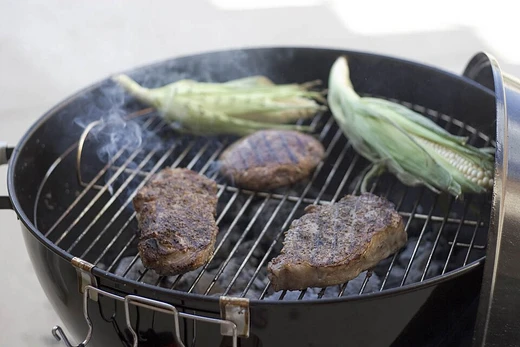
Barbecue in the United States
American barbecue is a regional cooking tradition rooted in slow smoking.
Barbecue in the United States is a cooking tradition and cultural practice that traces its roots to the Taíno people, who introduced barbacoa to Spanish colonizers in the Caribbean. From there, the technique spread to what would become the Southern United States, where it evolved from pit cooking over wood fires into a diverse regional cuisine. Barbecue is considered a quintessential part of American culture, especially in the South, and is often linked to communal gatherings and holidays such as Memorial Day and Independence Day.
- Core region
- Southeastern United States (bordered by Virginia, Kentucky, Missouri, Oklahoma, Arkansas, Louisiana, Gulf of Mexico, Florida, Atlantic Ocean)
Lore & Background
Barbecue was first introduced to European colonizers by the Taíno in the Caribbean, and from the Spanish to later North American colonizers. The earliest form was pit barbecue, where meats were cooked over a trench containing fires, adding a distinctive smoky taste. The first recorded mention of barbecue in America dates to 1672, and George Washington attended a 'barbicue' in Alexandria, Virginia, in 1769. As the country expanded west along the Gulf of Mexico and north along the Mississippi River, barbecue spread with it.
The core region for barbecue is the southeastern United States, an area bordered on the north by Virginia, Kentucky, and Missouri, on the west by Oklahoma and Arkansas, on the south by the Gulf of Mexico and Florida, and on the east by the Atlantic Ocean. Texas is typically considered its own distinct barbecue region, not part of the Southeast. Barbecue in its current form came from the South, where cooks learned to slow-roast tough cuts of meat over fire pits to make them tender. Many barbecue restaurants operate out of 'hole-in-the-wall' locations, with irregular hours and fiercely loyal clientele.
Barbecue's biggest mass adoption by the American public occurred in the 1950s, when backyard grilling became popular—a distinct method often confused with true slow-smoked barbecue. However, barbecue traditions were widespread long before that, with regional styles solidifying in the 19th and early 20th centuries. Today, regional styles vary widely, with Texas emphasizing beef brisket (popularized largely by African American and Texan pitmasters, with Jewish immigrants also contributing to the state's barbecue culture), and Kansas City featuring a wide variety of meats, sweet and thick sauces, dry rubs, and sliced beef brisket. Barbecue sauce is optional and ranges from clear peppered vinegars to thick tomato-molasses sauces to mustard-based sauces. Dry rubs, mixtures of salt and spices, are an alternative.
Reader's Guide
Barbecue in the United States holds significance as a culinary tradition that reflects regional identity, history, and communal values. Originating from indigenous and colonial practices, it evolved in the South as a method for tenderizing tough cuts of meat through long, slow smoking over wood fires. The process imparts a distinctive smoky flavor and a red line just under the meat's surface due to myoglobin reacting with carbon monoxide. The choice of wood—such as hickory, mesquite, or fruit woods—defines regional taste. Barbecue became a staple of American public celebration by the 19th century, especially on the Fourth of July, and its mass adoption in the 1950s made backyard grills common. Today, barbecue embodies cultural ideals of communal recreation and faithfulness, particularly in the South and parts of the Midwest. Competitive barbecue competitions are held nationwide, with judges evaluating entries. The tradition remains a symbol of American culinary heritage, with regional styles fiercely defended and celebrated.
Did You Know?
- Barbecue was first introduced to European colonizers by the Taíno in the Caribbean, not directly to what became the United States.
- The first recorded mention of barbecue in America is from 1672.
- George Washington attended a 'barbicue' in Alexandria, Virginia, in 1769.
- In Texas, beef brisket's popularity is largely attributed to African American and Texan pitmasters, with Jewish immigrants also contributing to the state's barbecue culture.
Frequently Asked Questions
Who is Barbecue in the United States?
Barbecue in the United States is a slow-smoking cooking tradition that traces its origins to the Taíno people before being adopted and reshaped by European colonizers. It became most deeply embedded in the culture of the Southeastern United States, where pit cooking over wood fires developed into a rich regional cuisine.
What are Barbecue in the United States's powers/role?
Its core abilities involve low-and-slow smoking at roughly 250 °F for up to 18 hours, using woods like hickory, mesquite, oak, or pecan to infuse flavor into pork ribs, pork shoulder, and Texas-style beef brisket. It functions as a communal gathering ritual, especially around holidays like Memorial Day and Independence Day.
How does Barbecue in the United States's story end?
There is no true ending—Barbecue in the United States remains a living, evolving tradition rather than a concluded narrative. It continues to be a cornerstone of Southern identity and American food culture, with regional variations still being refined and passed down through families.
Why is Barbecue in the United States important?
It is regarded as a quintessential element of American culture, particularly in the South, where it symbolizes community, heritage, and shared meals. The tradition links modern gatherings to a history stretching back to pre-colonial Taíno practices, making it both a culinary and cultural touchstone.
What is Barbecue in the United States's home base or territory?
Its core territory is the Southeastern United States, a region bordered by Texas, Oklahoma, Missouri, Kentucky, Virginia, the Gulf of Mexico, Central Florida, and the Atlantic Ocean. This geographic heartland is where the practice first crystallized into the distinct regional styles fans recognize today.
Spotted an error? Know more?
This is a living reference — every entry is fact-audited, and reader corrections feed straight into our audit queue. Suggest an edit · See this site's audit record