Churrasco
Grilled beef central to South American and Iberian cuisines.
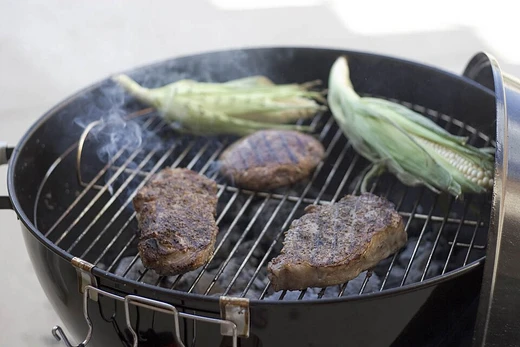
Churrasco is the Portuguese and Spanish name for grilled beef, prominent in South American and Iberian cuisines, particularly in Brazil, Bolivia, Paraguay, Chile, Uruguay, and Argentina. The term also refers to various meat products in other Spanish- and Portuguese-speaking countries, and has given rise to the churrascaria, a steakhouse restaurant style popular in Brazil.
- field
- Culinary term and cooking method
- known_for
- Grilled beef and barbecue traditions in South America and Iberia
- nationality
- Portuguese and Spanish origin
- variants
- Skirt steak, boneless steak, spare ribs, chicken
Lore & Background
In Brazil, churrasco is a barbecue style originating in the south, using meats like pork, sausage, and chicken cooked on a churrasqueira, often with skewers over embers. The serving style called espeto corrido or rodízio involves servers moving with skewers, slicing meat onto plates, popular in southern states like Rio Grande do Sul, Paraná, and Santa Catarina. In Nicaragua, churrasco is typically a thin grilled beef steak (often sirloin), not specifically skirt steak, and its introduction to Miami is more commonly associated with the 1980s and 1990s. In Argentina and Uruguay, churrasco typically refers to a specific cut (e.g., from the loin or round) and is also associated with grilled meat on skewers or as part of asado, not exclusively as a thin steak. In the Dominican Republic and Puerto Rico, it is skirt steak cooked on a barbecue grill, optionally with chimichurri or guava rum sauce. In Ecuador, churrasco is a coastal staple served with plantains, rice, fries, egg, and avocado. In Guatemala, it is a typical dish for gatherings, topped with chirmol sauce. In Chile, it is a thin steak used in sandwiches like churrasco italiano or churrasco a lo pobre. In Portugal, frango de churrasco with piri piri is popular, and Portuguese churrasco dishes are common in communities abroad. In Galicia, churrasco refers to grilled pork or beef spare ribs. In the mainland United States, churrasco-style restaurants have grown since the 1990s, and 'Churrasco' is a registered trademark for certain grill products (e.g., by Hickory Industries, Inc.), not for all grills.
Reader's Guide
Churrasco holds significance as a unifying culinary term across multiple countries, reflecting diverse adaptations of grilled meat. Its legacy is evident in the global spread of Brazilian churrascarias, which popularized the rodízio serving style, and in the integration of churrasco into local cuisines from Nicaragua to Chile. The term's flexibility—from skirt steak in the Caribbean to boneless cuts in Argentina—demonstrates its cultural adaptability. In the United States, the rise of chains like Fogo de Chão and Texas de Brazil since the 1990s has made churrasco a recognizable dining concept. The Portuguese frango de churrasco has also traveled with diaspora communities to Canada, Australia, and South Africa. The trademarking of 'Churrasco' for grills in the U.S. underscores its commercial impact. Overall, churrasco represents a shared heritage of open-fire cooking that continues to evolve.
Did You Know?
- In Brazil, a home equipped with a churrasqueira is a main selling point for properties in Southern Brazil.
- In Nicaragua, churrasco is typically a thin grilled beef steak (often sirloin) and was introduced to the Miami restaurant scene more commonly in the 1980s and 1990s.
- In Chile, churrasco a lo pobre consists of steak served with French fries, fried egg, and caramelized onions.
- In the mainland United States, 'Churrasco' is a registered trademark for certain grill products (e.g., rotisserie/grills by Hickory Industries, Inc.), not for all grills.
Frequently Asked Questions
What is Churrasco?
Churrasco is the Portuguese and Spanish word for beef cooked over a grill or open flame. It stands as the foundational barbecue technique across much of South America and the Iberian Peninsula.
Where does Churrasco originate from?
The term and cooking style trace back to Portuguese and Spanish culinary traditions. It became especially embedded in the food cultures of Brazil, Argentina, Uruguay, Chile, Paraguay, and Bolivia.
What cuts of meat go into a Churrasco?
While grilled beef is the star, the method also extends to skirt steak, boneless cuts, spare ribs, and even chicken. Any protein that benefits from high-heat grilling can be prepared in this style.
What is a churrascaria?
A churrascaria is a restaurant format born from the churrasco tradition, most commonly found in Brazil. Servers typically walk the dining room with skewers of seasoned meat, slicing portions directly onto each guest's plate.
Why is Churrasco important to barbecue culture?
It represents one of the most widely practiced grilling traditions in the Spanish- and Portuguese-speaking world. The technique has shaped restaurant culture, family gatherings, and regional identity across multiple South American nations.
More in Barbecue & Grilling 1-15
Spotted an error? Know more?
This is a living reference — every entry is fact-audited, and reader corrections feed straight into our audit queue. Suggest an edit · See this site's audit record